
Sodium Dioctyl Sulfosuccinate
Sodium Dioctyl Sulfosuccinate
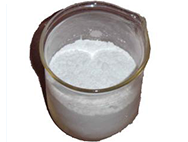
Chemical Name: Sodium Dioctyl Sulfosuccinate
Structure:
O C2H5
‖ ︳
H2C—C—O—CH2CH(CH2)3CH3
︳ ︳
NaO3S—C—C—O—CH2CH(CH2)3CH3
H ‖ ︳
O C2H5
Technical Specifications:
|
Item |
JS-T70 |
JS-T75 |
|
Appearance |
Colorless to light yellow viscous liquid |
Colorless to light yellow viscous liquid |
|
Active Content (wt%) |
68-70 |
74-76 |
|
Solid Content (wt%) |
70-72 |
76-78 |
|
pH Value (1% Aqueous Solution) |
5.0-7.0 |
5.0-7.0 |
|
Specific Gravity (25°C, g/cm2) |
1.060-1.090 |
1.060-1.090 |
|
Viscosity (25°C, CPS) |
~200 |
~350 |
|
Critical Micelle Concentration (CMC) (wt%) |
0.09-0.13 |
0.09-0.13 |
Product Features:
The two branched chains in the product are connected to -SO3Na at their roots, providing excellent wetting and penetrating properties whether in the "oil phase" or at the "oil-water interface." Its application limitation is that under strong acidic or strong alkaline conditions, the two ester chains in the molecule are prone to hydrolysis. It is generally used in mildly acidic, mildly alkaline, or neutral systems. Typically, the product remains stable in systems with pH 2-10.
Product Applications:
Applied in industries such as textiles, papermaking, petroleum, polymers, metallurgy, coatings, cosmetics, agriculture, mining, synthetic detergents, and photographic emulsion manufacturing.
Special Recommendations:
JS-T70 is particularly recommended for latex synthesis, defoaming and anti-shrinkage in pressure-sensitive adhesives, wet-process PU leather manufacturing, pesticides, household aerosol products, dry cleaning, textiles, and pigment dispersion.
JS-T75 is particularly recommended for latex synthesis, suspension polymerization, pesticide emulsification, dry cleaning, pigment dispersion, printing inks, and electronics industries.
JS-T100 is particularly recommended for polymer synthesis and ink industries.